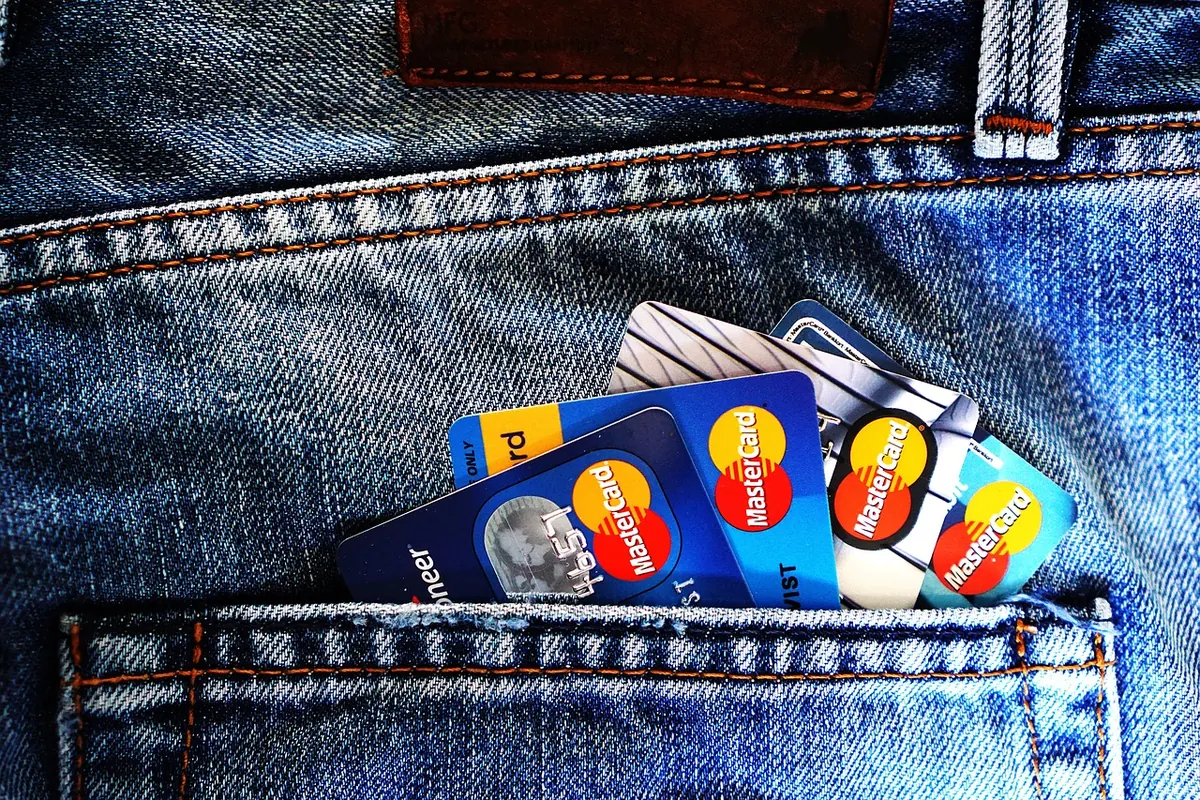
A credit card has two settings. One quietly pays you back a little on everything you buy. The other quietly takes a cut of everything you buy, and it does so without ever sending you a dramatic warning. The switch between them usually isn't one big decision. It's a handful of small habits that feel harmless in the moment and show up later as interest charges, fees, and a thinner wallet.
None of these five mistakes require you to be reckless with money. Most people who make them are organized, employed, and genuinely trying. They just haven't traced where the money actually goes each month.
Minimum payments are designed to keep your account in good standing, not to get you out of debt. That distinction costs real money.
Say you owe $3,000 at a 24% annual rate. In the first month, roughly $60 of interest accrues ($3,000 × 0.24 ÷ 12). If your minimum payment is about 2% of the balance, that's also around $60. You've sent money, your account looks fine, and your principal has barely moved. Next month the same thing happens.
The fix isn't complicated, but it does require a number. Pick a fixed payment you can genuinely afford every month — $150, $200, whatever fits — and treat it as a bill, not a suggestion. Then decide where it goes:
It's also worth a phone call. If you've been paying on time for a while, ask your issuer whether you qualify for a lower rate. The answer is sometimes no. It's occasionally yes, and the call takes ten minutes.
A single late payment can trigger two separate costs. The first is a late fee, which is annoying but finite. The second is a penalty rate on your balance, which can raise your interest rate sharply and stay there until you've made a stretch of on-time payments.
There's a third cost that doesn't show up on your statement at all. Payments more than 30 days late can be reported to the credit bureaus, where they can sit on your credit history for years and affect what you pay for loans and insurance.
Autopay solves most of this. Set it for at least the minimum on every card, on the due date or a few days before. If you'd rather pay in full manually, keep the autopay minimum as a safety net and make your real payment whenever you like. Two payments in a month won't hurt anything; a missed one will.
Check your due dates after any billing-cycle change, card replacement, or issuer system update. Autopay occasionally drops off, and you won't get a warning until the fee appears.
Cash advances are the most expensive thing a credit card does. Three things happen at once:
Worse, a cash advance can linger. On many accounts, the minimum portion of your payment is applied to your lowest-rate balance first, so the expensive advance balance sits there accruing interest while your cheaper purchases get paid down. If you've taken an advance, plan to pay well above the minimum until that specific balance is gone — and pay attention to which balance your payments are actually reducing.
For a genuine emergency, a small personal loan or a conversation with the biller about a payment plan is usually cheaper.
Closing an old card feels tidy. It often backfires.
Credit scores weigh how much of your available credit you're using. Remove a card from the equation and your utilization can jump immediately. If you carry $1,200 across cards with $4,000 in total limits, you're at 30%. Close a $2,000 card you never used and that same $1,200 is now 60% of your remaining $2,000 — and your score may dip within a month.
Unless the card charges an annual fee you don't want, keep it open. Make a small recurring purchase on it, set autopay for the full statement balance, and let it ride. If you truly want it gone, ask the issuer about a product change to a no-fee card instead of cancelling outright.
Rewards are only rewards when you don't pay interest to get them. Two percent back on $1,000 of spending is $20. If you're carrying that $1,000 at 24%, you're paying about $20 in interest every month. The cash back isn't a bonus at that point — it's a partial refund on a losing trade.
Here's a simple rule: if you can't pay the statement balance in full, use the card with the lowest rate and put the rewards card away until the balance is cleared. Points and miles are worth chasing only after the interest line on your statement reads zero.
This one surprises people more than any fee. As long as you pay in full each month, most cards give you a grace period: new purchases don't accrue interest until the due date. The moment you carry a balance, that grace period can disappear. New purchases start accruing interest right away.
So a card you're "using normally" while carrying a balance from last month can cost you interest on today's groceries, today's gas, and today's coffee. If you're carrying a balance, that card is a debt to pay down — not a payment method. Switch your everyday spending to a debit card or a card you clear in full, and put every available dollar toward the balance.
These mistakes rarely come from ignorance. They come from not looking. Once a month, sit down with your statements and do this:
Run through that list and you'll catch most of the leaks before they turn into hundreds of dollars a year. If you're already behind on payments or juggling several balances, a nonprofit credit counselor can review your options with you, and a fee-only financial planner can help if the debt is part of a bigger picture — that's worth the call when the numbers get uncomfortable.
Photo: TheDigitalWay / Pixabay

Compare the new city's real monthly costs and moving bills before you sign a lease, then build a budget that...
A practical holiday spending plan: set a realistic total, write a capped gift list, fund it with a sinking fund, and...

A decade-by-decade retirement checklist for your 30s and 40s, covering savings benchmarks, debt payoff order,...


Personal finance served fresh from the teapot.
